Legs for Days: How Britain's House Spiders Would Score on the Ballroom Panel
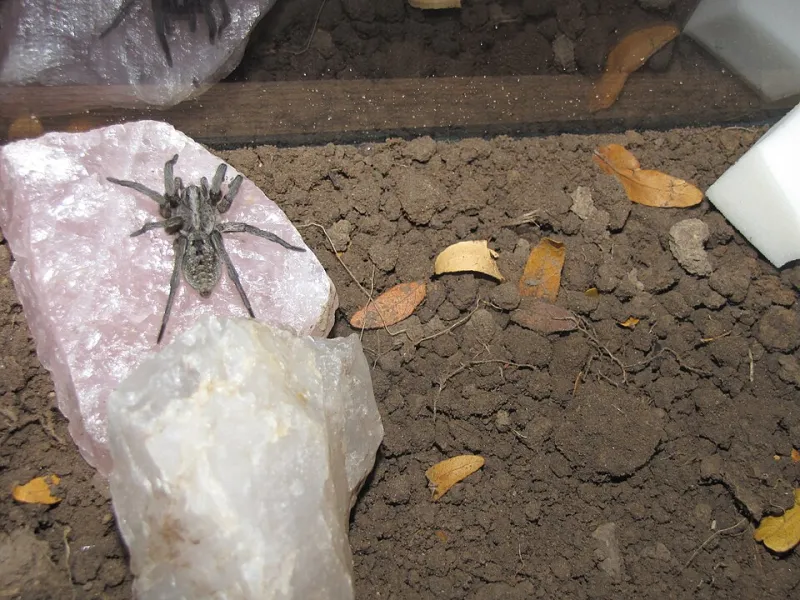
Photo: amandamonium, CC BY-SA 4.0, via Wikimedia Commons
Every September, without fail, Britain embarks on its most reliable national tradition after complaining about rail fares: spider season. The males of Tegenaria domestica and their chunkier cousins Eratigena atrica abandon their quiet corners and go wandering in search of love, which — to the naked human eye — looks exactly like a hairy torpedo sprinting across your living room carpet at 11pm.
But here at Animail, we believe it's time to stop running and start appreciating. These aren't invaders. They're performers. And every performer deserves a score from the panel.
The Judging Criteria
We've assembled an entirely unofficial scoring system, modelled loosely on a certain Saturday night dance programme. Marks out of ten, paddles up, and no, we won't be explaining the head judge's scoring to the viewers at home.
Technical Merit — Leg Span. The house spider of the British Isles can stretch a leg span of up to 12 centimetres, which is roughly the width of your palm and precisely the reason you're now holding your tea a little tighter. A generous span earns high marks for presence, though panellists deduct points for legs that seem to operate on different committees.
Artistic Impression — The Sprint. Speed is everything. House spiders can hit around 30 centimetres per second in short bursts, which doesn't sound like much on paper but feels like the land speed record when it's heading towards your slipper. Judges reward confident, direct movement. Hesitant dithering in the middle of the kitchen floor? That's a six at best.
The Showstopper — Ceiling Drop. The pièce de résistance. A spider descending on a single silk thread from the ceiling of a dark hallway, arriving at face height with zero warning, is the arachnid equivalent of a lift executed perfectly. Ten from Len, wherever he is now.
The Regional Rankings
Where you live matters. Based on thoroughly unscientific reader reports and one very committed Facebook group, here's our map of Britain's boldest specimens:
The North East — Durhams and Yorkshires produce spiders of considerable girth and zero fear. These are the bruisers of the circuit. They don't scurry; they parade.
The Home Counties — Polite but persistent. Southern spiders favour the classic bath manoeuvre, appearing suddenly in the tub and waiting, with great patience, for you to notice.
Scotland — Reports suggest Highland spiders are hardier, larger and entirely unbothered by cold. One reader from Inverness described her resident spider as "the size of a dartboard, and honestly quite good company."
Wales — Consistent performers with excellent technique. Cardiff readers report strong ceiling-drop routines and impressive bath-escape timing.
London — Smaller flats, smaller spiders, but what they lack in size they make up for in audacity. A Zone 2 spider will cross a shared kitchen at peak time with the confidence of a commuter who's already decided whose cereal box he's living behind.
Peace Treaties and Non-Aggression Pacts
Of course, not everyone is ready to award points. Britain has millions of arachnophobes, and for them, September is less a season and more a siege. Yet in our reader correspondence, a surprising number report having negotiated something resembling diplomacy.
Take Sandra from Leeds, who spent three years at war with a spider she named Gerald before reaching an accord: "He stays in the utility room, I stay out of the utility room. We've both accepted the arrangement. My husband is a courier in this treaty, nothing more."
Others have gone further. The popular trick of the upturned pint glass and piece of cardboard — Britain's official spider relocation device — has evolved into something of a catch-and-release programme, with readers reporting release points of "the far end of the garden," "next door's garden (sorry, Tracey)" and, in one memorable case, "the bus stop, which I accept was excessive."
There's even a growing school of thought that a resident spider is a good roommate. They eat flies, they pay no rent, they make no noise after midnight, and unlike your last flatmate, they've never left a wet towel on the bed. Several readers have promoted their spiders from prisoner to pest control officer without so much as a formal interview.
A Word from the Defence
It's worth remembering, before you reach for the hoover, that these eight-legged lodgers are harmless to humans and genuinely useful. They're also, in their way, rather magnificent: centuries of evolution, perfectly engineered for exactly one job, which is wandering around your hallway looking dramatic in autumn.
So this spider season, when something the size of a saucer erupts from behind the telly, take a breath. Grab the pint glass if you must. But maybe, just maybe, hold up a scorecard instead.
We're giving this year's cohort a nine. Docked one point for the incident in the shower. You know the one.