Woof, Yer Honour: Do British Dogs Really Bark in Regional Accents?
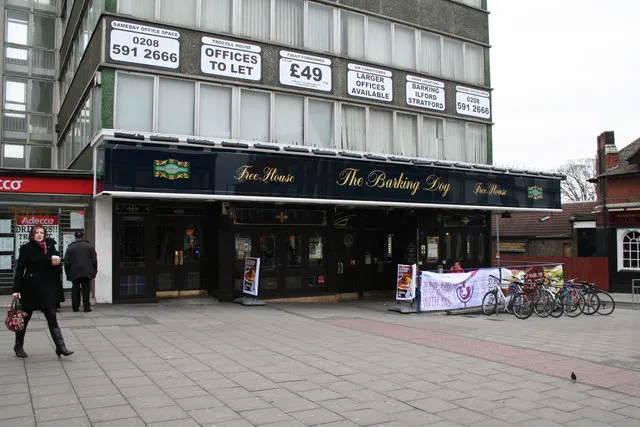
Photo: Dr Neil Clifton, CC BY-SA 2.0, via Wikimedia Commons
Every dog owner in Britain has, at some point, insisted their pet sounds local. The spaniel in Sheffield who barks like it's mid-argument about the offside rule. The lurcher in Liverpool whose woof has, allegedly, a touch of Scouse warmth. The West Highland terrier in Glasgow whose bark could cut through a hailstorm on the M8.
For years, this has been dismissed as owner wishful thinking — the same instinct that convinces us our babies are geniuses and our cats understand Spanish. But after Animail was flooded with reader clips of barking dogs from Truro to Thurso, we decided to investigate properly.
The Science Bit (There Is One)
We spoke to Dr Helen Marsh, a clinical animal behaviourist based in Bristol, who was refreshingly upfront about the evidence.
"There's no research showing dogs develop regional accents in the way humans do," she told us. "But there is solid evidence that dogs copy the vocal styles of the dogs and humans around them. Pitch, frequency, rhythm — these things shift within a household and a neighbourhood."
In other words: your dog isn't barking in a Cornish accent, but it might be barking with the same energy as the other dogs on your estate. Dr Marsh compares it to the way friends unconsciously sync their speech patterns.
"A dog living in a flat above a busy London road is exposed to constant low-level noise. They learn to bark in short, sharp bursts that cut through. A dog in rural Wales has space and quiet — you get longer, more drawn-out vocalisations. The difference is real, even if it's not an 'accent' in the linguistic sense."
What the Map Says
Using over 400 reader-submitted clips, we've sketched a rough — and we stress, roughly scientific — map of Britain's barking habits:
- London: Short, rapid-fire yaps. Possibly an adaptation to flat living, possibly just impatience with the Central line.
- Cornwall and Devon: Long, drawling barks with what one reader described as "holiday energy". Slower pace, more sea breeze.
- Scotland: Loud, assertive barks that one Edinburgh reader said "carry like a bagpipe". The Highlands produce impressive echo effects.
- The North East: Full-throated, no-nonsense woofs. Geordie dogs, per our readers, do not waste breath.
- The Home Counties: Polite, measured barks. One Surrey reader claimed her labradoodle barks "apologetically".
- Wales: Melodic and varied. Possibly the most musical barks in Britain, though we accept the sample size was heavily influenced by sheepdog owners.
You Told Us. Loudly.
The reader stories were the best part of this whole exercise. Margaret from Torquay sent us a clip of her retriever, Bertie, barking at the postman with what she insists is "a proper Devon lilt — he practically says 'afternoon'".
Meanwhile, Dev from Wembley wrote in: "My pomeranian barks like the building's on fire. My mum's pomeranian back in Leicester barks twice and goes back to sleep. Same breed, different dogs, different postcode. Make of that what you will."
We made of it a map. It's not peer-reviewed, but it is peer-barked.
Does It Matter?
Dr Marsh's practical takeaway is genuinely useful: your dog's bark style tells you about its environment, not its personality. A dog barking in short, frantic bursts in a noisy urban setting may be stressed, not rude. A quiet rural dog that suddenly barks persistently is telling you something has changed.
"Listen to the pattern, not the sound," she advises. "Frequency and context matter far more than pitch."
So no, your cocker spaniel probably isn't saying "alright, pet" in Geordie. But she is telling you something about her life, her street, and her stress levels — in the only language she's got.
Now if you'll excuse us, we have 400 more clips to listen to. Bertie from Torquay is up next, and frankly, we can't wait.