Bite Marks on the Doorstep: Is Your Delivery Package Ready for the Dog?
Photo: Paul Mashburn (Flickr user: Mushy's Captures) ( https://www.flickr.com/photos/23056599@N00/ ), CC BY 2.0, via Wikimedia Commons
Here's a fact that should alarm nobody who has ever owned a Labrador: a significant proportion of Britain's damaged parcel claims are not caused by clumsy couriers, torrential rain, or the dreaded 'left with neighbour' mishap. They are caused by the customer's own pets, who regard every delivery as a wrapped present addressed directly to them.
And slowly, quietly, UK retailers are starting to design for it.
A Brief History of the Post and the Hound
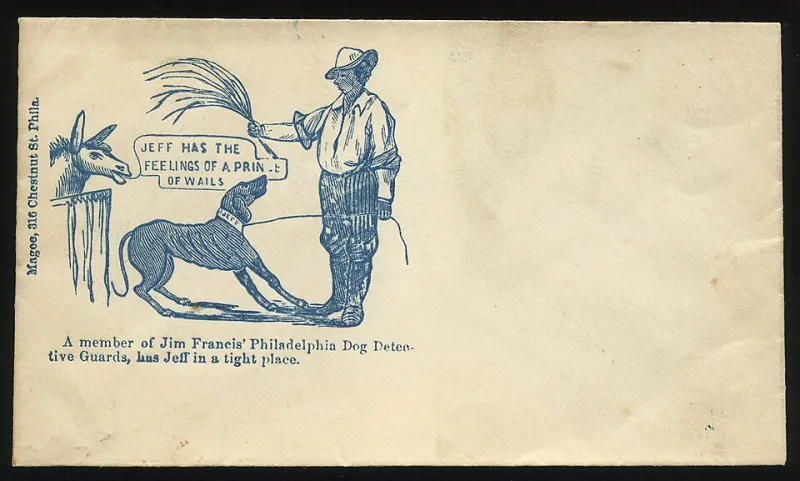
The battle between British pets and the postal service is older than the postcode. In the Victorian era, letter carriers carried whistles and sticks specifically to fend off territorial dogs — a hazard so widespread it appeared in official guidance. The Post Office's own records are littered (forgive us) with complaints about terriers, mastiffs, and one particularly notorious bulldog in Sheffield who, according to a report from 1897, 'commanded the street'.
What's changed is the parcel itself. A Victorian letter was a thin, uninteresting object. A modern delivery — squishy, scented with the ghost of whatever's inside, and left unattended on the doorstep for six hours — is essentially a dog toy with a shipping label. We have engineered the perfect canine temptation and then left it outside.
The Rise of the Porch Economy
The 'leave in porch' instruction was supposed to be a solution. Instead, it created the porch economy: parcels marinating in a glass-fronted box, fully visible to a bored spaniel watching through the window like it's telly.
Retailers have noticed. Several major UK homeware and pet-supply brands now offer reinforced 'pet-resistant' packaging options — thicker card, gnaw-resistant tape, and bags designed to survive a determined beagle's opening ceremony. Some are even printing paw-print warning icons on the label: this parcel may have been defended, but the dog won.
It's sensible, if slightly absurd. We have reached the point where packaging must be rated not just for rain and drops, but for teeth. Somewhere in a design meeting, a product manager is asking whether 300gsm cardstock is 'Labrador-proof', and honestly, that's the most British sentence imaginable.
Should Retailers Design for the Dog?
Here's where I plant my flag: yes — but not for the reasons you'd think.
The case isn't really about protecting parcels from pets. It's about protecting pets from parcels. Chewing through packaging risks swallowed plastic, tape, and worst of all, chocolate (a postal staple, and a canine emergency). If a dog is going to breach a parcel — and dogs will breach parcels; this is not a solvable problem, merely a delayable one — the packaging should fail safely. Tear lines that don't produce plastic shards. Materials that are at least not actively dangerous. A little paw-print icon that reminds the human at the door to check what actually got eaten.
There's also a customer-experience argument. A retailer who acknowledges the reality of pet-heavy households — 'yes, we know your dog got there first' — earns a kind of loyalty no discount code can buy. Pet owners talk. We have group chats. We will absolutely share the brand whose box survived Barry.
What You Can Do Before the Retailers Catch Up
Until pet-proof packaging becomes standard, the defence falls to you:
- Redirect deliveries to a safe spot — a hallway, a locked porch, anywhere the hound cannot access while you're out.
- Use delivery lockers and click-and-collect. The dog cannot ambush a parcel that never arrives.
- Train the door ritual. A dog who sits at the door rather than detonates through it is a dog whose parcels survive.
- Inspect every chewed box for chocolate, grapes, xylitol, or batteries before letting your pet near the wreckage.
The Verdict
The Victorians met this problem with sticks and whistles. We're meeting it with cardstock grades and paw-print icons. Progress, of a sort. But the deeper truth hasn't changed since 1897: in any contest between a British pet and a British parcel, the pet has home advantage, infinite patience, and nothing but time.
Design accordingly.