Two Robins, One Garden: The Bloodsport Hiding Behind Britain's Favourite Bird
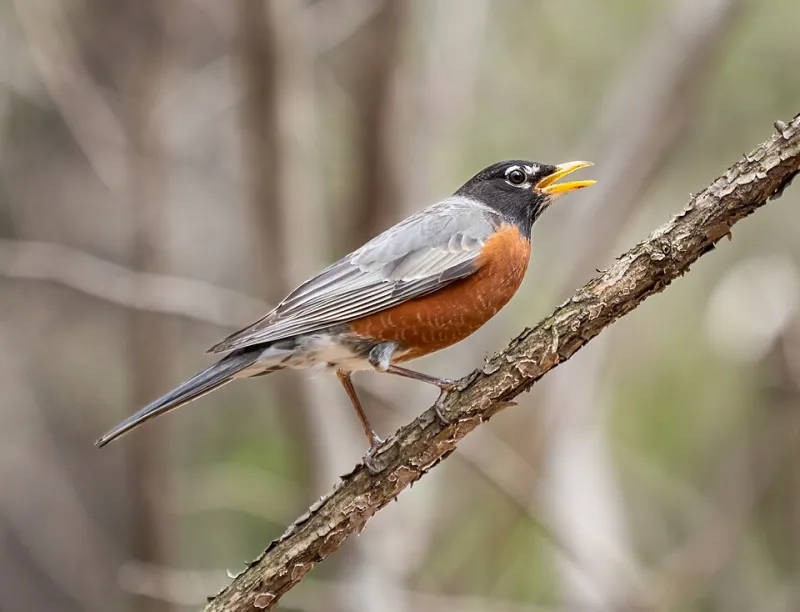
Photo: Rhododendrites, CC BY-SA 4.0, via Wikimedia Commons
Ask anyone to name Britain's favourite bird and you'll get the same answer before you've finished the question. The robin. The little red-breasted darling on our Christmas cards, the one that 'follows' gardeners around, the plump ball of festivity that sings sweetly from the hedgerow.
Here's the thing though: that sweet song? It's a threat. An unambiguous, feather-raised, beak-agape declaration of war. Your garden robin isn't serenading you. He's telling every other robin in earshot that this patch — your patch — belongs to him, and trespassers will be pecked.
The Bouncer of the Bird Table
Spend a proper amount of time watching a bird feeder and you'll see it happen. A second robin lands. The resident one puffs up like a tiny irate chest of drawers, flashes that famous red breast, and lets rip. Sometimes it stops there. Sometimes it doesn't. Robins will genuinely fight each other, and they can fight to the death — a fact the RSPB confirms with the weary tone of an organisation that has had to explain this to the public many, many times.
The red breast is the whole point. It's not decoration; it's a uniform. Experiments going back decades showed that a stuffed robin with a red chest gets attacked, while a perfectly good robin with the red plucked out is largely ignored. Robins aren't fighting each other, exactly. They're fighting the badge.
One reader from Solihull wrote in to tell us about 'Brendan', the robin who ruled her patio for four consecutive winters. Brendan tolerated the dunniches, the blackbirds, even the woodpigeons. But another robin? Not once. Not ever. 'He'd sit on the washing line like a gargoyle,' she told us, 'and the moment a rival landed, he was off the line like a feathered missile.'
Why So Aggressive, Brendan?
The science is straightforward, if a bit joyless. Gardens are finite. Food is finite. A robin's territory is precisely as big as it needs to be to keep him alive, and every square metre beyond that is wasted effort. So they defend the borders with a vigour that would embarrass a Premier League footballer.
In spring, the male sings to advertise his claim and warn off rivals. In winter, when singing is a bit too much effort in the cold, they resort to the classic red-breast display — posture, puff, glare. It's basically a standoff, and most of the time the weaker bird backs down before any feathers actually fly. Violence, for robins, is the last resort. But it is very much on the menu.
And here's a twist that surprises people: female robins hold territories too, especially in winter. The notion of the delicate little ladybird of the bird world is nonsense. She'll scrap just as hard for her patch.
Why Can't We Quit Them?
Given all this, why does Britain adore the robin so much? Partly history — robins followed the plough and later the spade, earning a reputation as the gardener's companion. Partly the Christmas card industry, which apparently decided in the Victorian era that a violently territorial insectivore was the height of festive cheer. (Fun detail: the original 'robins' on those cards were postmen, who wore red uniforms and were nicknamed robins. The bird just sort of took over the franchise.)
Mostly, though, we love them because they love us — or at least, they've learned that a digging human means exposed worms. That boldness, that beady eye meeting yours from a spade's handle, feels like friendship. It's opportunism, technically. But honestly, after a long British January, we'll take opportunism.
Living With a Tiny Tyrant
If you want to keep the peace — or rather, keep the war contained — the advice is simple. Feed little and often rather than dumping a banquet that invites raiding parties. Offer mealworms, which robins cannot resist and which they'll happily take from the ground near your feet. And if you hear the winter song — that thin, melancholy warble under the streetlights — know that you're listening to a border dispute being conducted in the dark.
The robin is a bully, a bouncer and a brawler. He's also, unmistakably, ours. Britain's favourite bird didn't earn the title by being nice. He earned it by winning.