Swipe Right, Fetch Forever: Inside Britain's Canine Cupid Departments
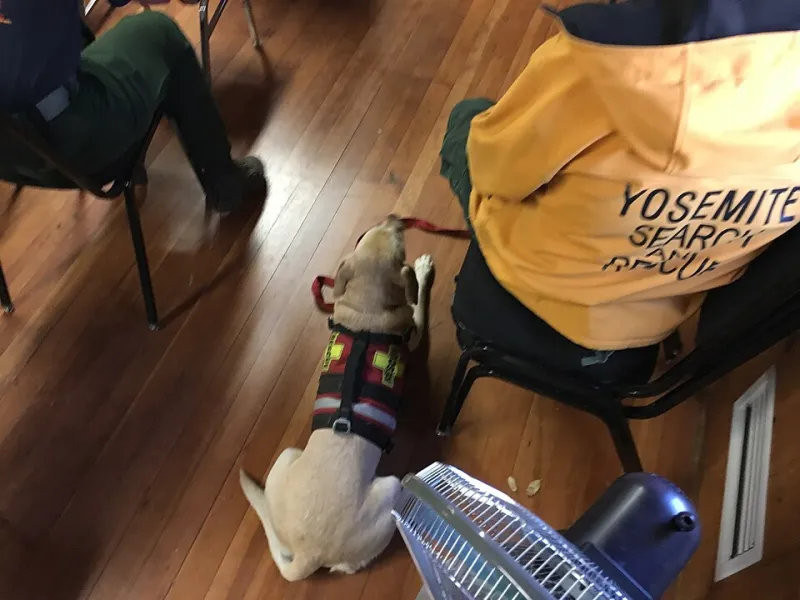
Photo: NPS Photo, Public domain, via Wikimedia Commons
Somewhere in a quiet office in Battersea, a woman is studying your lifestyle with the intensity of an MI5 vetting officer. She knows your working hours, your garden situation, whether you've got children, and — crucially — how soft your sofa is. No, she's not from the council. She's a rehoming officer, and she's about to decide whether you and a three-year-old lurcher named Kevin are destined for each other.
Welcome to Britain's least glamorous but most successful dating app, where nobody swipes and everybody sniffs.
It's Not You, It's Your Laminate Flooring
The stereotype of the rescue centre as a solemn conveyor belt of sad eyes and hopeful signs has long since retired. Today's major organisations — Battersea, Dogs Trust and their many regional cousins — operate what amounts to a matchmaking bureau with surprisingly rigorous screening.
"People assume we just want to get dogs out the door," one rehoming officer told us, requesting anonymity because she's about to be brutally honest. "In reality, we reject more applications than a posh university. If your idea of a perfect Sunday is a nine-hour hike and the dog in question thinks stairs are a personal affront, that's a no from us."
The intake process for dogs reads like a personality quiz from a magazine that's taken itself far too seriously. Does Kevin prefer his own company? Is he a fan of felines, or does the word 'cat' trigger a red mist? How does he feel about being left alone while you pop to Aldi? Every answer builds a profile — not of the dog's looks, but of the dog's dealbreakers.
Then the humans come in, and the real interrogation begins.
The Lifestyle Quiz Is Real and It's Spectacular
Prospective adopters filling in a Dogs Trust or Battersea application form should expect questions that wouldn't look out of place on a mortgage application. Hours at home. Garden access. Existing pets. Experience with the breed. Whether there are toddlers involved, and if so, whether they're the sort of toddlers who pull ears.
But the assessment doesn't stop at the form. Staff talk about "the walk test" — an informal meeting where dog and human are introduced and everyone pretends not to be judging everyone else. There are tales of entire family delegations turning up, grandparents included, only for the dog to take one look at the pram and stage a sit-down protest in the car park.
One officer described a match that nearly collapsed over, of all things, a hoover. The dog had a documented aversion to vacuum cleaners. The applicant's partner was a professional carpet cleaner. The paperwork went back and forth for a fortnight before a compromise was reached: the hoover lives in the shed, the dog gets the living room, and everyone's happy.
"It sounds daft," she admits, "but these near-misses are exactly why we do it properly. One wrong match and you've got a heartbroken family, a stressed dog, and a space freed up that we'll just have to fill again. Nobody wins."
The Return Policy Nobody Wants to Use
Here's the uncomfortable truth of the industry: matches do fail. Responsible centres will always take a dog back — no judgement, no questions — but every return is treated as a learning experience rather than a failure of the animal.
"We had a lovely spaniel placed with a retired couple who adored her," one Battersea-based source recalls. "Problem was, she'd been used to a busy family home and found the quiet unbearable. She started rearranging their garden furniture at 3am. Lovely couple, wrong energy match. She went to a household with three teenagers and settled in like she'd always been there."
This, officers insist, is the difference between rescue matchmaking and a trip to a pet shop. The dating app analogy only stretches so far — there's no unmatching, no ghosting, no moving on to the next profile. There's only careful homework, honest conversations and the occasional 3am garden furniture incident.
The Science Bit (With Added Slobber)
Is any of this actually scientific? Partly. Behavioural assessments, breed knowledge and basic compatibility frameworks do the heavy lifting. But every officer we spoke to admitted there's a je ne sais quoi — an instinct, a gut feeling, a moment when a dog leans into a stranger's leg and everyone in the room quietly exhales.
"You can have two theoretically perfect matches on paper," one told us. "One meeting, nothing. Second meeting, fireworks. You can't formula it. The dog decides, really. We're just the chaperones."
And what of the successful matches? The officer told us about a greyhound placed with a delivery driver who worked alone all day. The dog now rides shotgun on every route, wears a hi-vis coat, and has reportedly become a minor celebrity on the Royal Mail rounds in his corner of the Home Counties.
"That's the job," she says. "You just hope you've read the humans as well as you've read the dogs."
So if you're thinking of adopting this year: fill in the form honestly, expect the sofa inspection, and don't take it personally if the hoover is deemed a dealbreaker. Somewhere out there is a dog who thinks you're the best thing since a dropped sausage. Britain's canine Cupids just need to make the introduction.
Have you been matched with a rescue dog — or been spectacularly unmatched? We'd love to hear your story. Drop us a line, ideally with photos of the garden furniture carnage.